
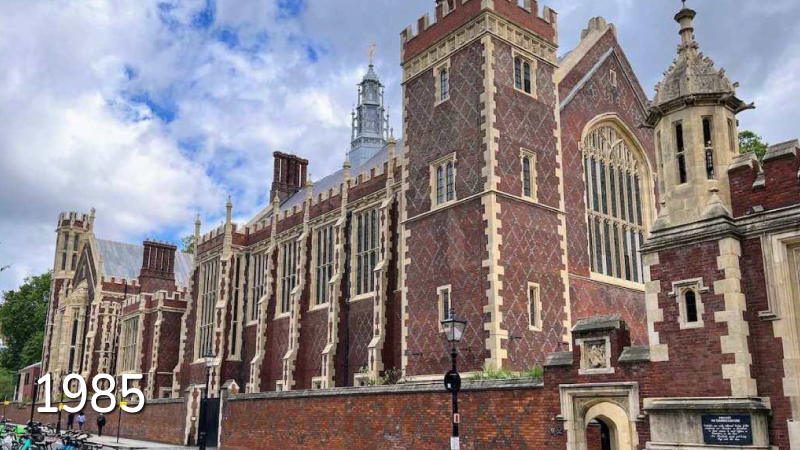
In May 1985, I sat my Bar exams. I was 21 years old. I was called to the Bar at Lincoln’s Inn in July and returned to register as a barrister in Mauritius in September. I was 50th on the list of practising barristers – and the only way to become a barrister was to qualify in the United Kingdom.
There was no pupillage, but some seniors generously provided space – mostly in the form of a desk and chair – for new barristers to start their practice. Otherwise, the only option for private practitioners was to rent an office, put up a signboard and wait for clients to walk in or for compassionate attorneys to send some simple instructions. The staples of criminal practice were cases of wounds and blows, rogue and vagabond and assault. Of course, there was also the welcome lifeline of the state appointments in the form of “in forma pauperis” cases – mostly alimony cases, which paid very meagrely but provided much needed exposure in the court room. And if desperate for court exposure, one could always submit oneself to the gruelling ordeal of replacing other counsels in formal matters – and risk public humiliation when quizzed on a file whose intricacies one did not master! I was lucky enough to be allowed the use of a senior’s messroom, which I converted into an office by adding a desk, 2 chairs, a filing cabinet and a phone (land) line… and so started my practice as a barrister!
In that year, the Supreme Court comprised of 6 judges – all dignified, wise, elderly gentlemen. District Courts were quaint colonial wooden buildings which had somehow survived the pitiless vagaries of successive vicious cyclonic seasons. The drive to and from Port-Louis was smooth and uninterrupted – and the drive to the rural district courts was a pleasant day trip often involving purchase of fresh fish and an improvised picnic lunch of fried local delicacies.
At that time, seniors genuinely acted as mentors and provided well-meaning advice on any matter – there was a standing protocol for being introduced to seniors: either you found another senior to introduce you or in extreme cases, you had yourself accompanied by another less senior benevolent barrister for a meeting. No senior would receive an unaccompanied new callee. Likewise, prior personal introduction to a magistrate was mandatory before appearing in their court. Judges and senior members of the Attorney General’s Office needed to be formally met, accompanied by a member of the then Crown Law Office. It was not uncommon for an unintroduced barrister to face remarks like “I cannot hear you” or “I do not know you”. All these may sound rather stifling by today’s standards, but it was a well-oiled machine that functioned perfectly if – and since – the rules were followed.
That was the time when everyone knew their place and how to mingle and socialise without causing embarrassment or “faux pas”. That was also the time when judges told junior barristers that their door was always open for guidance and advice – and it was really the case. No appointment needed – just a quick nudge from the judge’s secretary.
In 1985, a barrister automatically attracted respect and acted with utmost decorum and courtesy. There was no need to be taught – the profession was in itself a playground, a university and a village.
Author:

Urmila BOOLELL SC
Temple Head – Senior Counsel – Head of Law Firm